Acro Umbrella
Icarian Games & Acro Pops Classes in Vancouver
Are you ready to get it poppin’
Learn Icarian Games through progressive, coach-led classes in Vancouver. Build confidence with pops, catches, whips, foot-to-hand skills, and partner communication in a welcoming community that emphasizes safe progressions and dynamic circus partner acrobatics.
No Partner Needed
We’ll rotate partners throughout class so everyone has the opportunity to learn.
Intermediate Friendly
Designed for students with a foundation in L-basing and partner acrobatics.
Safe Progressions
Learn drills, spotting techniques, and clear communication before moving into bigger pops.
Drop-in options available

Icarian Acro At a Glance
Discipline: Icarian Games (dynamic partner acrobatics)
Also known as Icarian acro, acro pops, foot juggling
- Best for: Intermediate students with previous L-basing or partner acrobatics experience
- What you’ll learn: Pops, catches, whips, foot-to-hand skills, timing drills, and safe progressions, spotting
- Training focus: Communication, timing, air awareness, power, precision, and trust.
- Prerequisites: Comfortable with foundational L-base skills (side-star, bird, throne, etc.) and spotting.
- Safety first: Progressive drills and spotting techniques before higher throws or catches.
- What to bring: Comfortable athletic clothing and a water bottle.
- Location: Aché 341 E Broadway Intermediate Acroyoga
What Are Icarian Games?
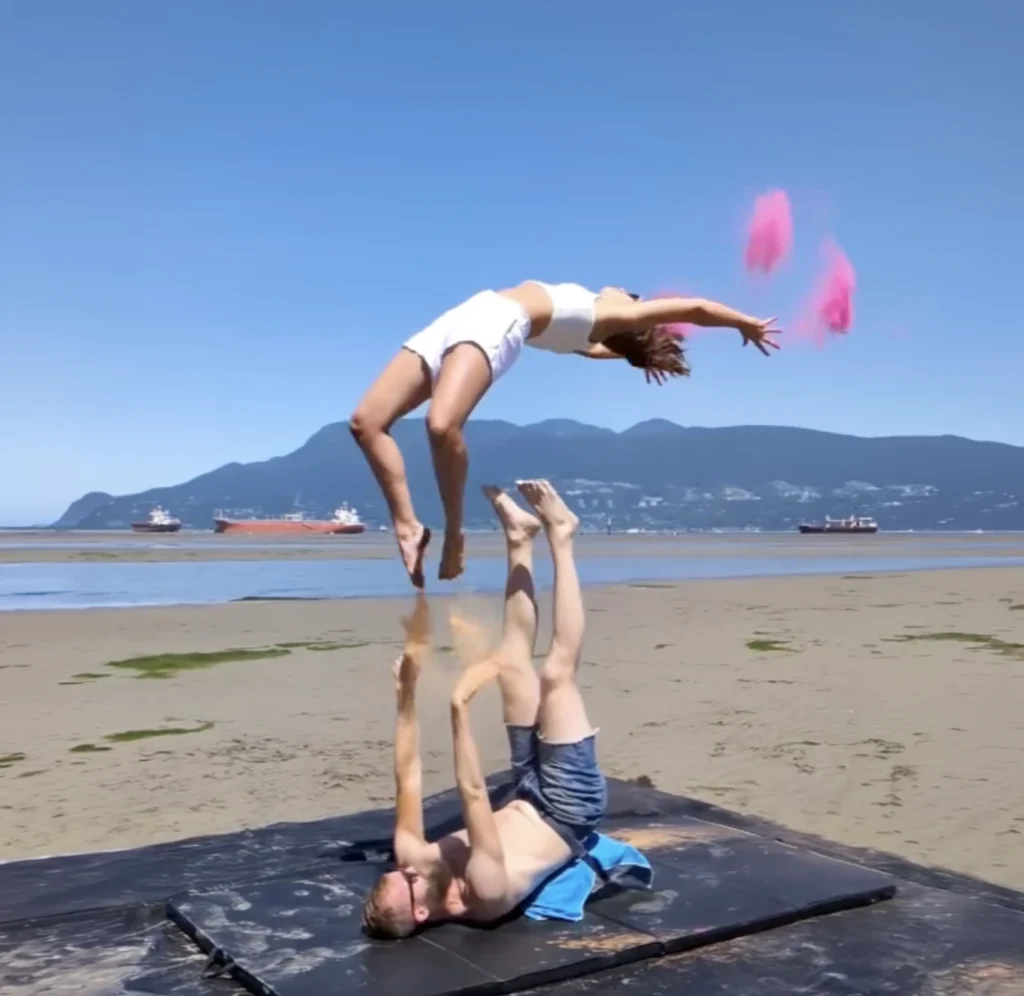
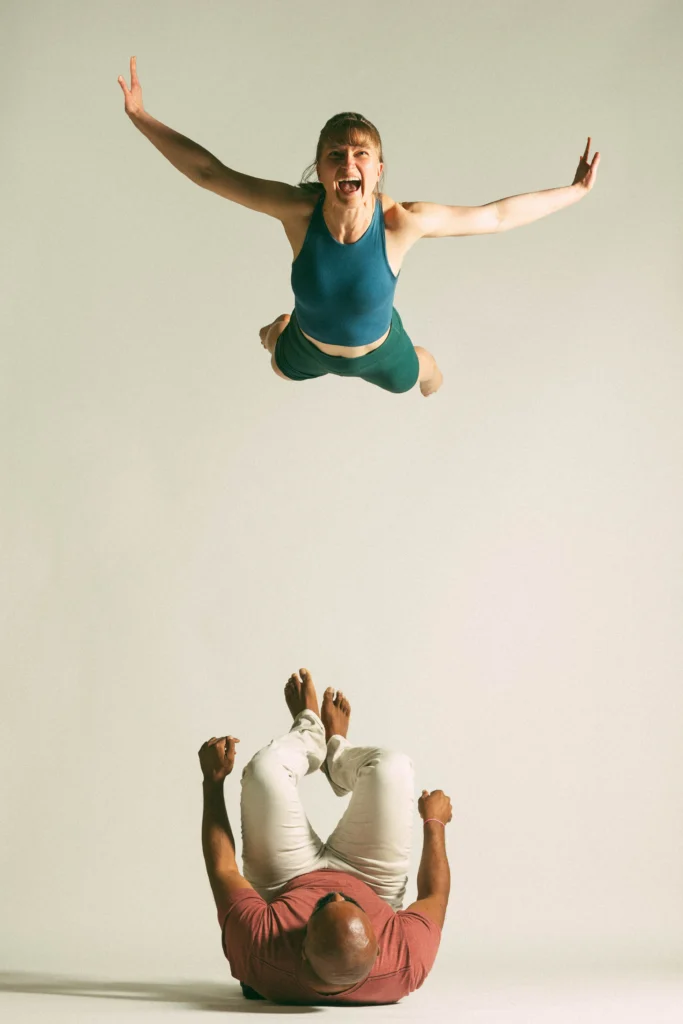
Icarian Games is a dynamic circus discipline where a base lies on their back and uses their feet to launch, catch, and redirect a flyer through the air. Unlike static partner acrobatics, where partners hold balanced poses, Icarian focuses on continuous movement, precise timing, and controlled throws and catches. It combines strength, trust, communication, and technique to create smooth, dynamic sequences that can range from beginner skills to advanced flips and twisting releases.
Within the partner acrobatics community, you’ll often hear people refer to this style of training as Icarian acro or simply Icarian. These informal names describe the same discipline but are more commonly used in acroyoga and recreational acrobatics communities. Whether you’re training for performance, improving coordination, or exploring a new circus discipline, Icarian Games develops timing, confidence, and teamwork through progressive skill development.
What Are Acro Pops?
Acro pops are dynamic partner acrobatics skills where the base briefly launches the flyer into the air before catching them again. Depending on the skill, the base may maintain contact with the flyer throughout the movement or release them completely for a moment before the catch. Pops can range from small introductory throws to advanced skills involving rotations, twists, and linked sequences.
Icarian Games training includes many different types of pops. Students begin with foundational timing drills, communication, and safe catching techniques before progressing to skills such as
- bird pops
- throne pops
- castaways
- whips
- foot-to-hand catches
- Bed pops
- front/back tucks
- feet juggling
- Dynamic transitions
- Linked Icarian sequences
Every progression builds confidence while emphasizing safety, control, and partner trust.
Acro Umbrella Reviews


What You’ll Learn
Every class builds on the foundations of dynamic partner acrobatics before introducing more advanced Icarian Games skills. Rather than rushing into big throws, you’ll develop the timing, communication, and body awareness needed to train confidently and safely.
Icarian Acro Prerequisites
Should I Take Beginner Acro First?
For most students, yes.
Icarian Games is built on the same partner acrobatics foundations you’ll learn in beginner classes. Before adding throws and catches, it’s important to feel confident with communication, spotting, and basic L-base skills. Developing these fundamentals first makes learning Icarian safer, more enjoyable, and often much faster.
If you’re completely new to partner acrobatics, we recommend starting with our Beginner/All-Levels Acro classes before joining Icarian training. Students with previous experience in acroyoga, circus, gymnastics, cheerleading, dance, or partner acrobatics may already have many of the skills needed.
Foundations
Timing
Learn how to synchronize with your partner so every pop, catch, and transition feels controlled. Good timing reduces effort, improves consistency, and creates smoother, more efficient movement.
Communication
Clear communication is one of the most important skills in Icarian Games. You’ll practise verbal cues, non-verbal signals, and partner feedback to build trust before every skill.
Spotting
Learn how to spot safely for different skills, support your training partners, and create a safer learning environment. Spotting is a shared responsibility and an essential part of every class.
Safe Catches
Strong catches begin long before the flyer leaves the base’s feet. You’ll learn proper body positioning, hand placement, and progressive catching drills so every new skill is introduced with confidence. Communication, timing, and trust always come before height or difficulty.
How Do I Know If I’m Ready?
You’ll likely enjoy this class if you can confidently do most of the following:
- Comfortable with L-basing fundamentals
- Able to spot safely and follow spotting instructions
- Familiar with basic washing machines and transitions
- Good body awareness and control while basing or flying
- Comfortable communicating clearly with a partner
- Confident catching and being caught during foundational drills
- Previous experience in acroyoga, partner acrobatics, circus, gymnastics, cheerleading, or dance is helpful but not required
What If I Really Want to Try Icarian?
We get it. Dynamic pops are exciting, and they’re often what inspires people to start training.
The good news is you don’t need years of experience before learning Icarian. You just need a solid foundation. Our coaches can help you decide whether you’re ready for this class or whether you’ll progress more quickly by spending some time in Beginner Acro first.
Everyone develops at a different pace. Our goal isn’t to rush you into bigger skills. It’s to help you build confidence and train safely for years to come.
If you’re unsure, don’t worry. Come talk to one of our coaches before class. We’ll help you find the best place to start so you can progress safely and have fun from day one.

Ready to level up to Standing Acro classes?
Join our welcoming community and discover what you are capable of.
Training Tips for Icarian Bases

Great bases aren’t the strongest people in the room. They’re the ones their flyers trust.
Soft Feet
One of the biggest surprises for new bases is that catching isn’t just about having accurate feet. A good catch absorbs energy instead of stopping it abruptly.
Think of your feet like a trampoline, not a brick wall.
By relaxing through the ankles and allowing your legs to absorb force, catches become smoother and much more comfortable for your flyer.
Experienced bases often say they “receive” the flyer rather than simply catching them. This ability to absorb movement makes training safer and allows skills to become more consistent over time.
Communication Is Your Most Important Skill
The best bases are excellent listeners.
Check in before trying something new. Ask your flyer how the last attempt felt. If they say a catch felt hard, too high, or off balance, take that feedback seriously. Every attempt is an opportunity to adjust together. Additionally, check in with your own emotional state – are you ready for these skills? Do you need a break? Do you want to see others do it first to get more familiar with it?
Strong communication builds trust faster than landing bigger tricks.
Slow Is Fast
Don’t rush to bigger throws.
Most Icarian skills become easier when you reduce power and focus on clean technique first. A small, accurate pop teaches better timing than a huge throw with an unpredictable catch. As consistency improves, height comes naturally.
Be Aware of the Power Dynamic
As the base, you’re often responsible for controlling how much force goes into a skill.
Your flyer is placing a great deal of trust in you. Respect that trust by choosing progressions appropriate for both partners, listening when someone isn’t comfortable, and never pressuring anyone into trying a skill before they’re ready.
Great bases spend the majority of their time and effort on ensuring safety!
Training Tips for Icarian Flyers

Great flyers are engaged, vocal, and curious.
Build an Active Core
One of the most common beginner mistakes is trying to “relax or flop” in the air.
Instead, think about creating one connected body from your fingertips to your toes. An active core helps transfer force efficiently, keeps your body aligned during pops, and makes catches feel lighter and more predictable for your base. It’s about finding the right balance between rigidity and softness.
Meet the Catch
A catch is something you participate in, not something that happens to you.
Keep your body connected, maintain your shape, and actively press into the catch rather than collapsing onto your base’s feet. This helps distribute force through your whole body instead of concentrating it in one area.
Stay Curious, Not Perfect
Every pop teaches you something.
Some attempts will feel effortless. Others won’t. Instead of chasing perfection, pay attention to what changed. Was your timing early? Did you lose your body tension? Did you hear your partner’s cue?
Progress comes from small, incremental adjustments and consistency.
Trust Is Built Together
The strongest flyers communicate just as much as the strongest bases.
If something feels uncomfortable, say so. If a catch felt amazing, tell your partner why. Honest feedback helps both people improve and creates a training environment where everyone can progress safely and confidently.
The Best Icarian Partnerships Aren’t Built on Strength
The most successful Icarian partners aren’t always the strongest, tallest, or most experienced. They’re the ones who communicate openly, respect each other’s boundaries, and celebrate steady progress over quick results.
Every clean pop starts long before anyone leaves the ground. It begins with trust, patience, and two people working together toward the same goal. That’s the kind of community we strive to build at Acro Umbrella.
Do I Need an Icarian Butt Bump?
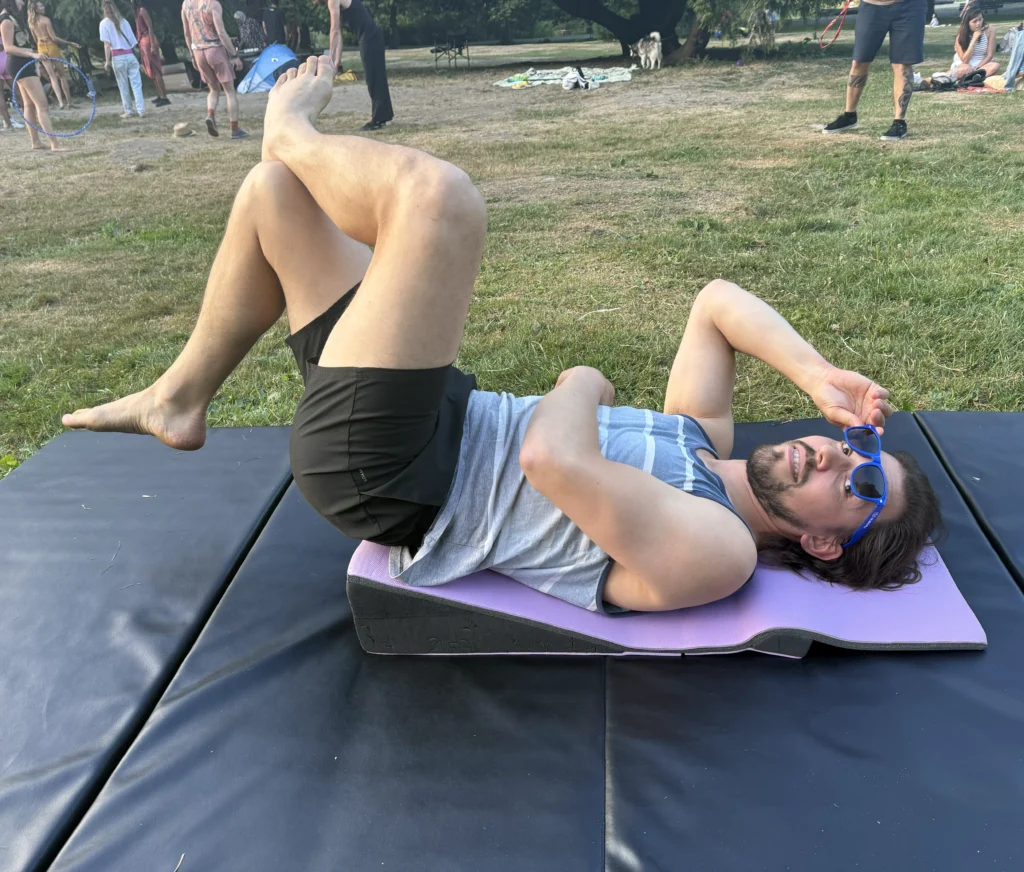
If you’re learning Icarian Games or L-base partner acrobatics, a butt bump can make your training more comfortable and improve your body position. Many beginner bases use a butt bump, hip wedge, or yoga bolster to elevate their hips, improve alignment, and reduce strain on the lower back and hamstrings while developing good technique.
What Is an Icarian Butt Bump?
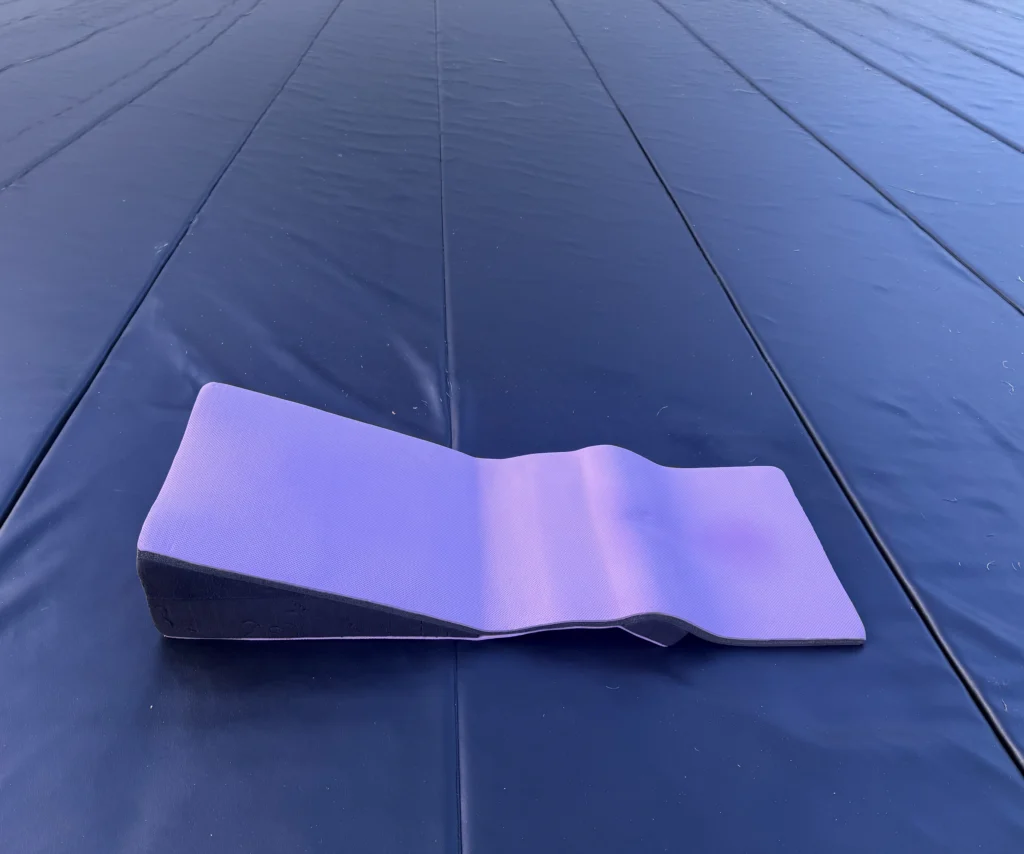
An Icarian butt bump is a small wedge or cushion placed under the base’s hips while lying in an L-base position. You might also hear it called a hip pad, acro wedge, or Icarian pillow.
Its purpose is to help you train with better alignment while you build the mobility, strength, and body awareness needed for dynamic partner acrobatics.
Why Do Bases Use a Butt Bump?
Many new bases have tight hamstrings or limited hip mobility. When the hips stay too low, it becomes harder to stack your legs over your pelvis, maintain a neutral spine, and absorb your flyer’s weight comfortably.
A butt bump can help you:
- Improve L-base alignment
- Reduce stress on the lower back and hips
- Make catches feel smoother
- Focus on timing and communication instead of flexibility limitations
- Build good movement habits from the beginning
How Thick Should My Butt Bump Be?
There’s no single “correct” height.
Some experienced bases prefer a very low butt bump, while others use a much higher wedge. The right height depends on your flexibility, body proportions, comfort, and the type of Icarian skills you’re training.
If you’re new to Icarian, don’t feel like you need to buy an expensive pillow right away. Start with folded towels, yoga bolsters, foam wedges, or folded panel mats. Stack or remove layers until you find a height that allows you to comfortably stack your legs over your hips without straining your lower back.
As your flexibility and technique improve, your preferred height may change. Many acrobats continue experimenting with different setups depending on the skill they’re practising or the partner they’re training with.
Acro Tip: Don’t copy someone else’s setup just because they’re an experienced base. The best butt bump is the one that lets your body move comfortably, absorb your flyer’s weight smoothly, and maintain good alignment throughout the skill.
Our Product Recommendations for Butt Bumps
Premium option: Prillow Ergonomic Boost (Acropri) 129,00 €
Travel Option: AcroBack Acroyoga Pillow (Beyond the Mat) 112.70 EUR
Budget option: Any Amazon car seat foam wedge often works just as well, especially while you’re figuring out what height suits your body.
Build Your Own DIY Icarian Butt Bump
You don’t need to spend hundreds of dollars to find the perfect Icarian butt bump. In fact, many experienced bases build their own because it’s more affordable and easier to customize.
The biggest advantage of going the DIY route is that you control the height, firmness, and shape. Everyone’s body is different. Some bases like a subtle lift, while others prefer a taller wedge to help stack their hips under their shoulders. Instead of guessing, you can start with inexpensive foam layers and add or remove height until it feels just right.
Julian’s DIY design is one of the cleanest we’ve seen. By stacking high-density foam and shaping it to fit your body, he created a professional-looking butt bump that rivals many commercial options. If you’re handy with a utility knife and some spray adhesive, it’s a fun weekend project that can save you money and give you exactly the support you’re looking for.
Icarian Safety: Hand Spotting vs. Spotting Belts
One of the biggest priorities in Icarian Games is creating an environment where students can learn confidently while managing risk. Every skill has different spotting needs, and there’s no single method that’s best for every trick.
Hands on Spotting
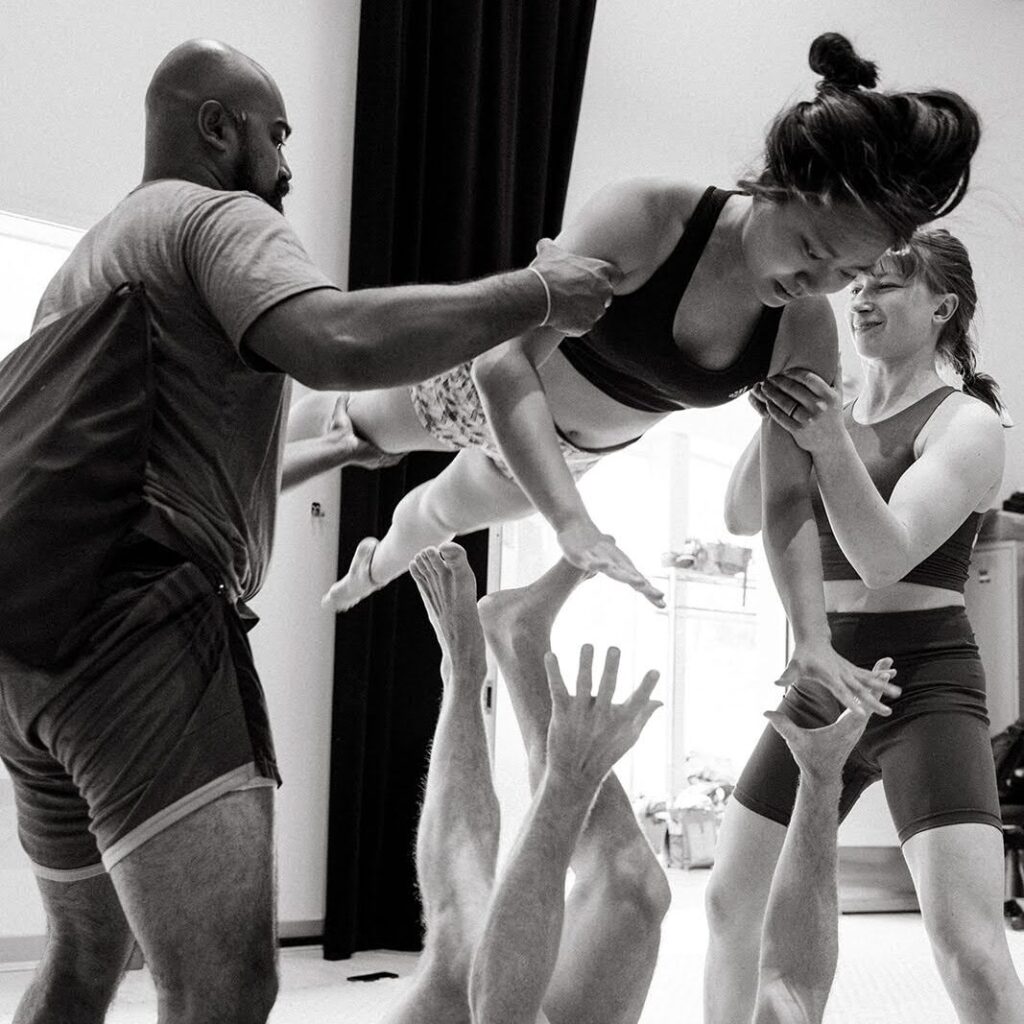
Hand spotting is the traditional way to learn many Icarian skills and remains one of the most effective safety tools. Skilled spotters can guide a flyer’s movement, provide confidence, and help correct technique in real time. For introductory pops, catches, bird pops, and many intermediate skills, hand spotting is often all that’s needed. Good communication between the base, flyer, and spotters is just as important as the spot itself.
When Spotting Belts Can Help
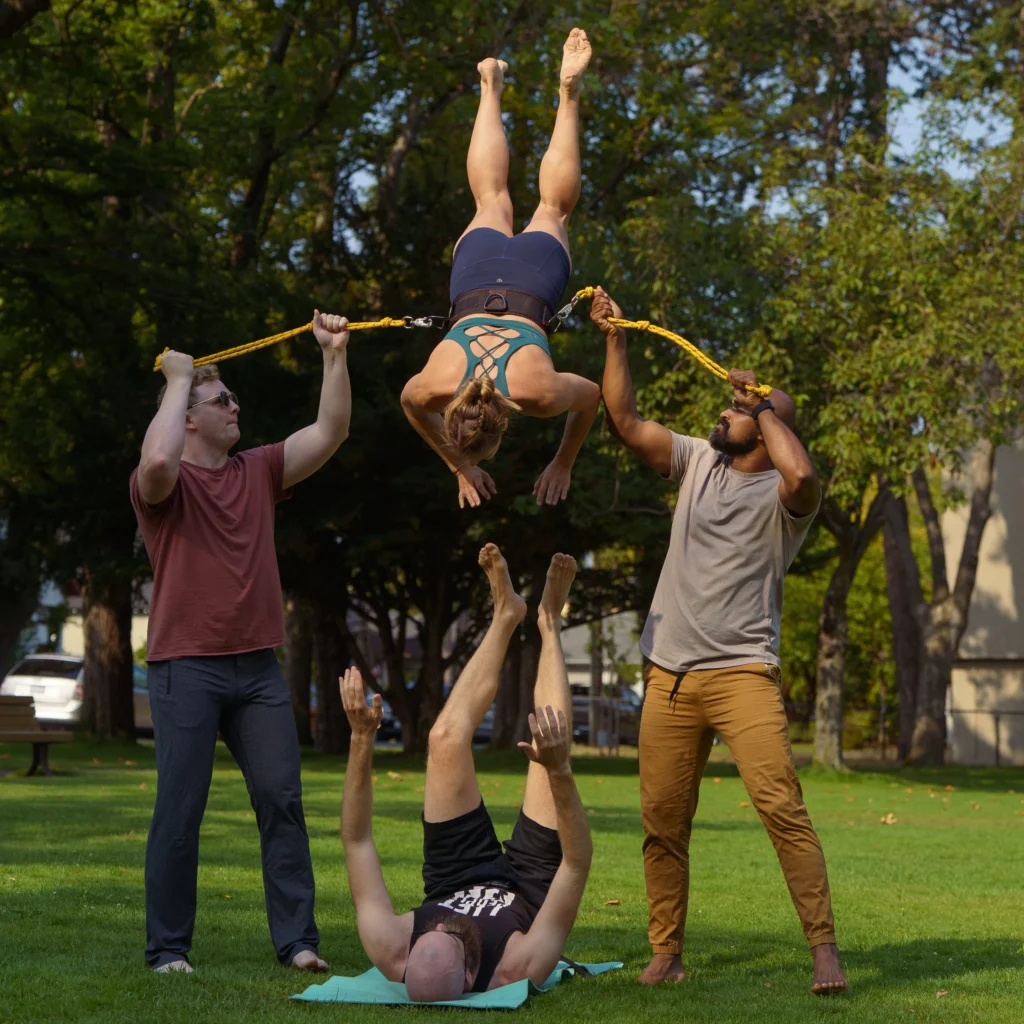
For some dynamic skills, a hand-held spotting belt offers additional support. The belt allows spotters to assist the flyer while giving them more freedom to rotate naturally through the skill. It also helps reduce uneven pulling from one side, which can unintentionally change the flyer’s rotation or body position.
This doesn’t make the skill “easier,” but it can create a smoother learning environment for movements that involve full rotations or limited opportunities for hand spotting. Spotting belts are particularly useful when introducing skills such as front tucks and martinis, where maintaining a natural flight path is important.
The Right Tool for the Right Skill
Neither method is better than the other. Experienced teachers choose the spotting technique that best matches the skill being taught, the student’s experience, and the learning objective. Sometimes that’s hands-on spotting. Sometimes it’s a spotting belt. Often, it’s a combination of both as students build confidence and consistency.
Above all, the most important safety tools in Icarian acro aren’t the equipment. They’re clear communication, progressive skill development, experienced spotting, and partners who listen to each other. Those habits create safe, confident acrobats long after the spotting belt comes off.
Common Mistakes New Icarian Acrobats Make
Everyone makes these mistakes while learning. The good news? We learn from them and get better.
Trying to Throw Higher Instead of Better
The biggest misconception is that bigger throws create better tricks. In reality, clean Icarian comes from timing, leg drive, and precision. A smooth, controlled pop is much easier to catch than a wild launch.
Holding Your Breath
When people get nervous, they often hold their breath without realizing it. This creates unnecessary tension throughout the body and slows your reactions. Staying relaxed helps both partners move more fluidly.
Skipping Fundamentals
Everyone wants to throw front tucks and flashy skills, but the best Icarian athletes spend countless hours refining straight pops, catches, and timing. Strong fundamentals make advanced skills feel surprisingly easy
Rushing Progressions
Just because you caught something once doesn’t mean you’ve mastered it. Consistency matters far more than checking a trick off your list. Build confidence before adding more height, speed, or difficulty. Learning progressions and prerequisites is a key part of safe Icarian training.
Forgetting to Communicate
A simple “higher,” “slower,” “more left,” or “again” between every attempt leads to faster improvement than repeating the same mistake five times. The best partnerships communicate constantly.
Training Without Enough Safety
Crash mats, experienced spotters, and appropriate progressions are part of smart training, not signs that you’re a beginner. Most advanced coaches use these tools to practise new skills safely before removing them.
Are Acro Umbrella Teachers Certified?
Classes at Acro Umbrella are led by experienced instructors with strong backgrounds in acroyoga, partner acrobatics, and movement training. Our teachers are either certified through recognized programs such as VanCity Acro or Montreal Acro teacher training or have 8+ years of hands-on teaching and practice experience.
Instructors are trained in spotting, safety, and progressive teaching methods, ensuring every class is structured, supportive, and accessible for all levels. This means you’re not just learning skills; you’re learning them in a way that prioritizes safety, clear communication, and long-term progression.
Whether you’re brand new or returning with experience, our teaching approach is designed to meet you where you are and help you build confidence step by step.
Contact us if you have any further questions.
FAQ Intermediate Acro Yoga Vancouver
I can do washing machines and L-basing. Am I ready for Icarian?
If you’re comfortable with L-base fundamentals, basic washing machines, spotting, and communicating with a partner, you’re probably ready to start learning introductory Icarian. You don’t need to be an elite acrobat. Our coaches will help you build the foundations before moving into bigger pops.
Is every pop considered Icarian?
Not quite. “Pop” describes any dynamic throw or release between partners. Icarian Games is the broader circus discipline that includes pops, catches, whips, foot-to-hand skills, and linked dynamic sequences. Think of pops as one category of skills within Icarian training.
I’m always the base or flyer. Can I still take this class?
Absolutely. You’ll become a better partner by understanding both roles. While you’ll naturally spend more time in your preferred role, you’ll have opportunities to experience basing, flying, and spotting throughout class.
Do I need a dedicated training partner at this level?
No. Partners rotate regularly, which means you’ll learn to adapt to different body types, communication styles, and movement patterns. If you already have a training partner, you’re welcome to work together during portions of class as well.
I’ve only trained at acro jams. Will this class feel different?
Yes, in the best way. Jams are fantastic for exploration, but classes provide structured progressions, spotting, coaching, and drills that help you build skills safely and consistently. Many students find they progress much faster with regular instruction.
What if I’m nervous about getting thrown?
That’s completely normal. We don’t start by launching people into the air. Every skill is broken into manageable progressions, with plenty of spotting and coaching along the way. You’ll build confidence one step at a time, and you’ll never be pressured to try something you’re not ready for.
Will learning Icarian improve my standing acro and hand-to-hand?
Yes. Icarian develops timing, communication, body awareness, explosive power, and precise partner coordination. Those skills transfer well to standing acro, hand-to-hand, and many other circus disciplines.
What’s the biggest mistake people make when learning Icarian?
Trying to throw higher instead of throwing better. Great Icarian isn’t about height or flashy tricks. It’s about consistency, timing, communication, and clean technique. Strong fundamentals make advanced skills feel smoother, safer, and much more fun.
Is there an ideal height or weight difference between partners?
Not necessarily. Successful Icarian partnerships come in all shapes and sizes. While some skills may feel easier with certain height or weight combinations, technique, timing, communication, and trust matter far more than body type.
Many students are surprised by how adaptable Icarian can be. Good coaching helps bases, flyers, and spotters adjust skills to different partners rather than looking for the “perfect” match. Training with a variety of people often makes you a more versatile acrobat.
If you have a significant size difference or are same size with your partner, we’ll help you choose appropriate progressions and modify skills as needed.
I started Icarian acro, and I’m covered in bruises. Is that normal?
For many beginners, yes.
The first few classes can leave you with sore muscles and a few bruises, especially on your hips, thighs, feet, arms, or shoulders. Your body is adapting to new pressure points, learning how to absorb force, and developing the timing needed for dynamic partner acrobatics.
The good news is that most of these “acro bruises” become less common as your technique improves.
How can I prevent bruising?
1. Focus on clean timing and absorb your catches rather than throwing higher.
2. Wear leggings or extra shorts over fitted athletic clothing that provides a little extra coverage.
3. Build skills gradually instead of rushing to advanced pops.
4. Communicate with your partner after every attempt.
5. Ask for spotting or regressions if a skill feels inconsistent.
6. Give your body time to recover between training sessions.
A few bruises are often part of the learning process, but sharp pain, joint pain, or injuries that don’t improve aren’t normal. If something doesn’t feel right, stop, let your coach know, and work on an easier progression before trying the skill again.