Acro Umbrella
Acroyoga Classes in Vancouver
Find the class that fits your practice
Explore beginner, all-levels, intermediate, standing acro, handstand and mobility, and Icarian classes in Vancouver. No partner is required. Choose a starting point that matches your experience, goals, and comfort level.
No Partner Needed
Beginner to Advanced
Safe, Supported and Fun
Which Acroyoga Classes in Vancouver Are Right for Me?
The best class depends on your current experience and what you want to train. Complete beginners can start with beginner-friendly acroyoga or an all-levels class. Students with solid foundations can move into intermediate acroyoga, standing acro, handstands and mobility, or dynamic Icarian training.
Acro Umbrella offers acroyoga classes in Vancouver for people who want to learn partner movement in a community setting. You do not need to bring a partner. Classes may include basing, flying, spotting, partner communication, balance, inversions, transitions, dynamic skills, and circus-style partner acrobatics depending on the class focus.
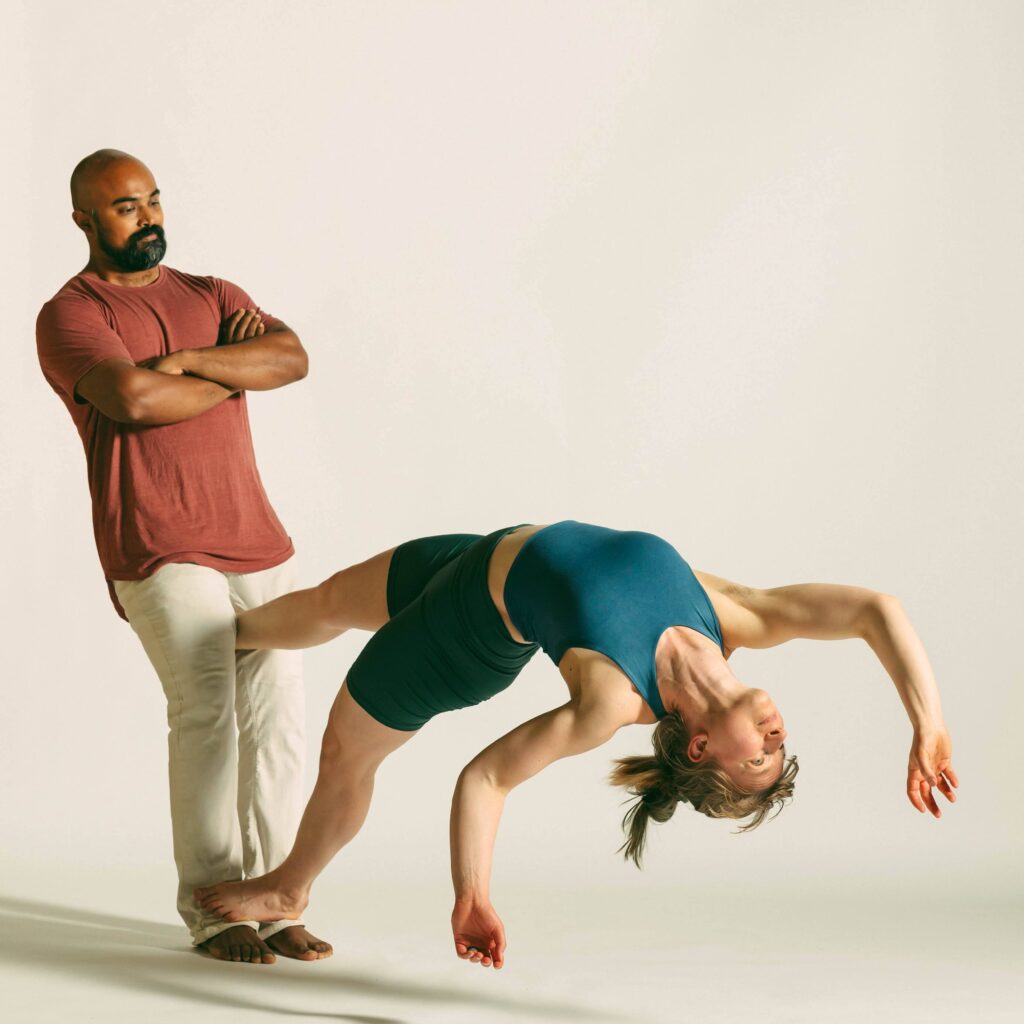
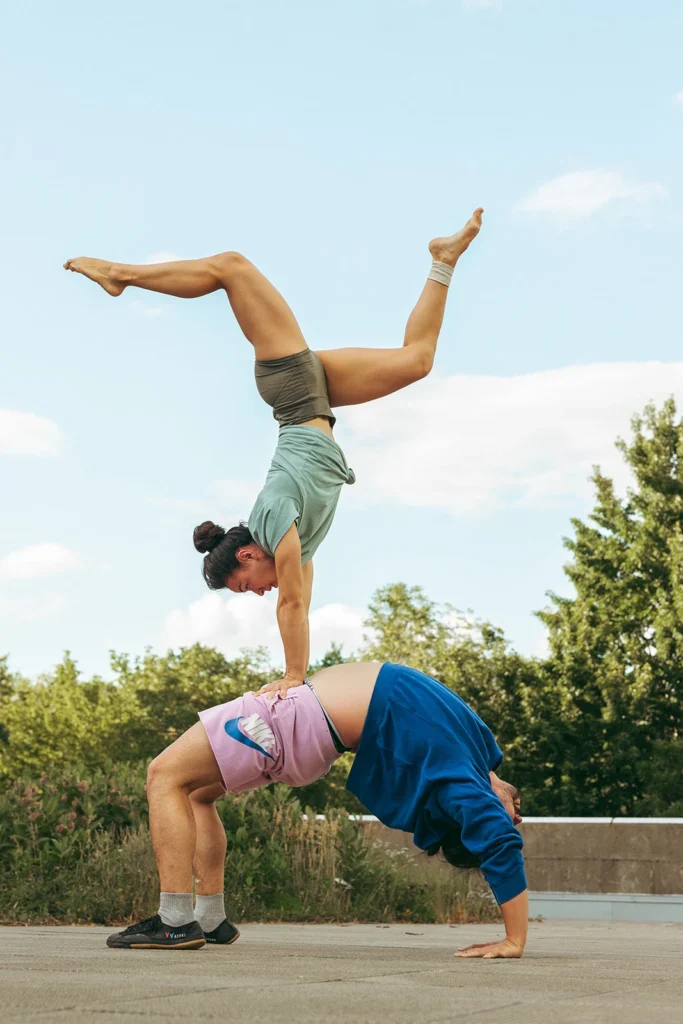

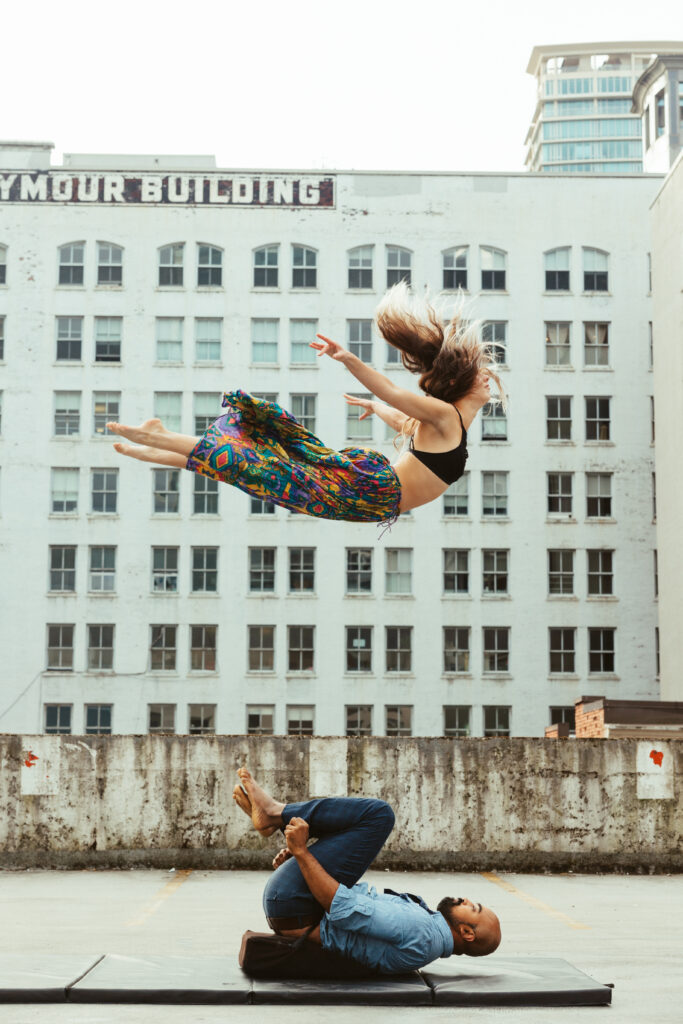
Beginner Acroyoga
Best for: first-timers and newer students.
Learn the foundations of acro yoga through simple partner shapes, safe exits, basing, flying, spotting, and communication. You can come on your own and rotate partners during class.
All Levels Acroyoga
Best for: students who want flexible progressions and community training.
All-levels classes bring newer and experienced students into the same room. Teachers offer progressions and variations so you can work at a level that feels challenging without needing to keep up with someone else’s practice.
Intermediate Acroyoga
Best for: students with consistent foundations who are ready for faster progressions.
Intermediate acroyoga classes may explore flows, washing machines, pops, dance lifts, trio work, and more complex transitions. Some sessions have prerequisites so the group can spend more time training skills and less time reviewing foundations.
Standing Acro
Best for: students interested in balance, dance lifts, hand-to-hand, and upright partner skills.
Standing acro moves partner acrobatics off the floor and into skills that require strong communication, stable foundations, active spotting, and progressive strength and balance work.
Handstands & Mobility
Best for: people building inversion strength, flexibility, mobility, and body awareness.
These classes support both standalone handstand practice and acro cross-training. Sessions may include shoulder mobility, core control, balance drills, flexibility, alignment, and progressions for getting more comfortable upside down.
Icarian & Acro Pops
Best for: experienced students interested in dynamic partner acrobatics.
Icarian and acro pops focus on timing, throws, catches, airtime, and coordinated movement between base, flyer, and spotters. Training is broken into progressions so dynamic skills can be practised with clearer timing and safer spotting.
What Is Acroyoga?
Acroyoga is a partner movement practice that combines elements of acrobatics, balance, communication, and collaborative play. One person may base, another may fly, and a third person often spots. Roles can rotate throughout class, so students learn how skills work from different perspectives.
Some Acro Umbrella classes stay close to foundational L-base acroyoga. Others move into standing acrobatics, hand-to-hand, dynamic pops, dance-inspired lifts, or circus-style partner skills. The class description and prerequisites will tell you what kind of training to expect.
Do I Need a Partner to Join an Acroyoga Class?
No. You can come to Acro Umbrella classes without a partner. Partner rotations are part of many classes, which gives students a chance to work with different people, body types, communication styles, and experience levels. If you arrive with a partner, you may still be encouraged to rotate for some exercises.
What Happens in an Acroyoga Class?
1. Warm Up
Classes begin by preparing the body for the skills being taught, with movement, mobility, strength, or partner drills.
2. Learn the Skill
Teachers demonstrate the movement and break it into manageable steps for bases, flyers, and spotters.
3. Spot & Rotate
Students practise with spotting, communication, and partner rotations so the skill can be explored from multiple roles.
4. Practise & Play
Depending on the class, there may be time to repeat the skill, connect it into a flow, or ask instructors for feedback.
How Do I Know Which Level Is Right for Me?
If you are completely new, start with beginner or all-levels acroyoga. If you already feel comfortable with common foundational poses, spotting, and partner communication, intermediate classes may be a better fit. Specialized classes such as standing acro and Icarian may list prerequisites for particular sessions.
- New to acro: beginner-friendly or all-levels classes.
- Building consistency: all-levels classes and repeated foundation training.
- Comfortable with foundations: intermediate acroyoga.
- Want upright partner skills: standing acro.
- Want inversion training: handstands and mobility.
- Want dynamic throws and catches: Icarian and acro pops.
Where Are Acroyoga Classes in Vancouver Held?
Acro Umbrella classes run at different Vancouver venues depending on the class and schedule. The current booking page lists the location, time, level, teacher, and any prerequisites for each session. Check the class listing before you arrive, since different programs may train in different spaces.
What Should I Wear or Bring?
Wear comfortable clothing that lets you move freely and that will stay in place while you are upside down. Most acroyoga is practised barefoot. Bring water, remove jewellery that could catch on a partner, and check the individual class listing for anything specific to that session.
New to Acroyoga in Vancouver?
Start with our First Acro Yoga Class Guide for a deeper look at what happens in class, how partner rotations work, what to wear, and how to prepare for your first session.
You can also meet Acro Umbrella’s teachers and learn more about the different movement backgrounds represented in the community.